A Taste of Hospitality
In harmony with nature. With the region. With one another.
Through the gardens, into the kitchens, to the dining tables
The aroma of fresh herbs fills the air, dishes are being plated in the open kitchen, and someone passes a bowl around the table. Great culinary experiences begin in many different ways. Sometimes they start in the garden, sometimes with a recipe handed down through generations, or with the idea of bringing people together to cook and sample delicious food. At Schlosshotels & Herrenhäuser, we meet hosts who bring the flavors of their region to the plate. We wander through herb gardens with them, discover time-honored culinary knowledge, and take our seats at a table where each course brings a new surprise.


Ansitz Strasserwirt: A Herb Garden with Roots in the 17th Century
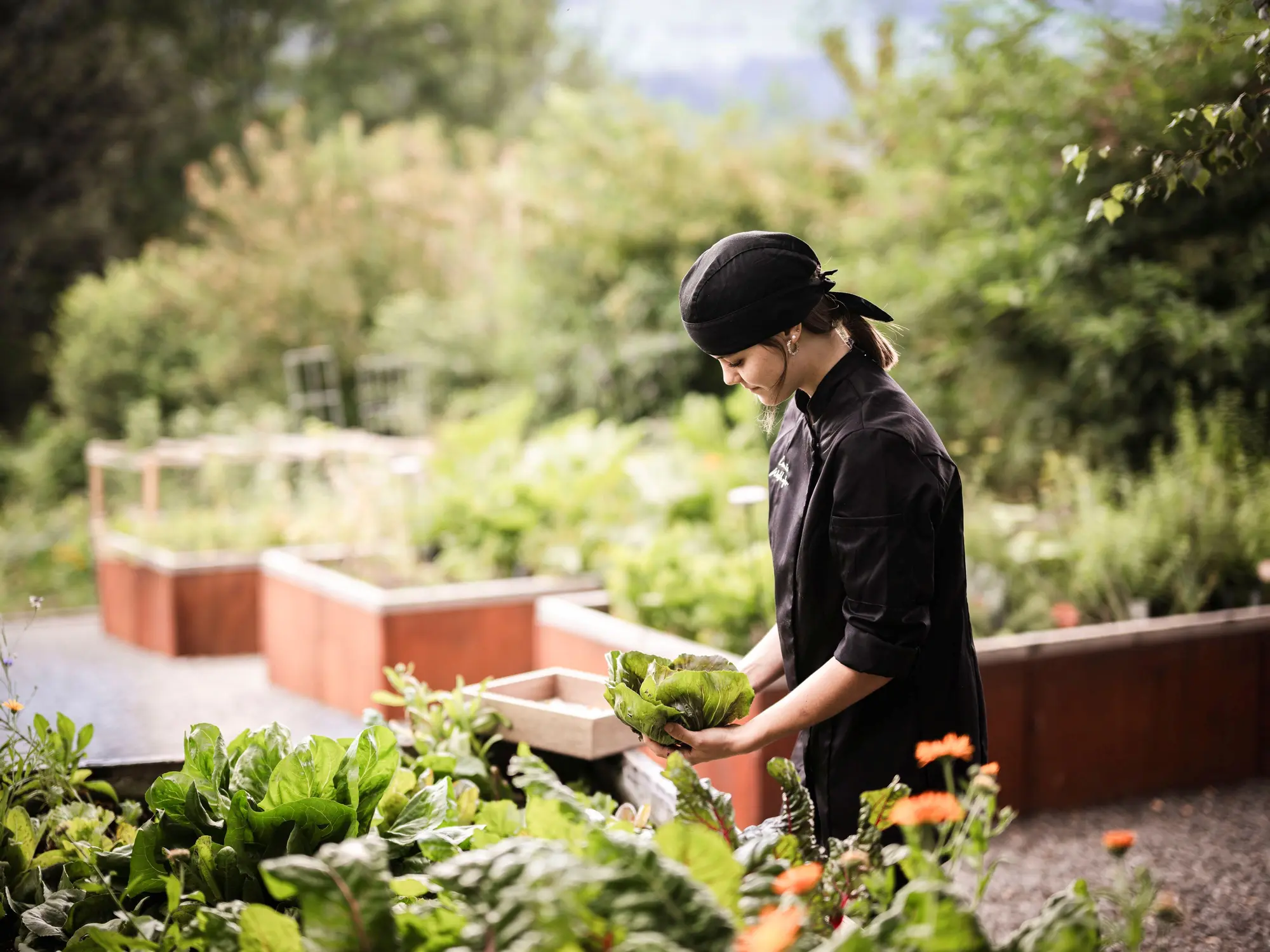
In the three gourmet dining rooms of Ansitz Strasserwirt in East Tyrol, the menu reflects whatever the region has to offer in each season. Some of the ingredients come from the estate's own garden, whose history dates back to 1635. Even then, records mention a "kräutle garten," or little herb garden. Today, seven raised beds are filled with lettuce, vegetables and herbs, with one devoted entirely to edible flowers. Potatoes and cabbage come from the fields, while apples, pears and quinces are harvested from the orchards. For more than three decades, Margit, a longtime member of the team, has tended this flourishing garden, drawing on her extensive knowledge of companion planting and natural gardening methods. Freshly harvested vegetables make their way straight to the kitchen, where Alexander Waldnig transforms them into light, imaginative, award-winning dishes with a skilled hand. Every noodle and every filled pasta creation is freshly made from scratch.
A Stroll Through the Garden with Margit
Once a week in summer, Margit takes guests on a tour of the garden, sharing her knowledge of the plants and how to tend them. When the weather is nice, yoga mats are also rolled out in the Lyrical Garden. And at ‘Strasserwirt & Friends,’ everyone gathers around a long table to eat, swap stories, and savor good food together.


Ansitz Felsenheim: The Best Parties Happen in the Kitchen
At Ansitz Felsenheim in Lermoos, Tyrol, the day begins with eggs from their own hens and herbs out of the garden. Even at the opulent breakfast, it becomes quite clear just how closely great flavor and a commitment to knowing exactly where ingredients come from go hand in hand. The Ansitz supports small local farms and hill farmers, promotes biodiversity, and treats food with care and respect. Later, guests can make themselves comfortable in the Tower Café or discover Benedikt Kössler's inventive cooking at one of the group dining events.
Benedikt Kössler Invites You to the Table
The family's next-generation host and chef began his culinary training in the kitchen of Johanna Maier in Filzmoos. He went on to work in Munich, London and Copenhagen, gaining experience that he eventually brought back to Felsenheim. Here, he put his own culinary vision into practice: In 2022, part of the existing apartment building was transformed into a dining room with an open kitchen.
At his monthly Supper Club, Benedikt serves six surprise courses featuring ingredients from the region. What comes next is always a surprise, while the atmosphere remains relaxed and casual. At the weekly house dinner, traditional Austrian dishes are served with a modern twist. And on pizza nights, the aroma of freshly baked dough, tomatoes and herbs fills the air – a small tribute to Austria's Italian neighbors. The open kitchen keeps guests close to the action, inviting them to watch, strike up conversations, and feel a little like they're having dinner at a friend's house.


Stiegl-Gut Wildshut: Home-Sourced Organic Delights
About half an hour's drive north of Salzburg, Stiegl-Gut Wildshut brings farming, brewing, distilling and dining together in one location. What grows in the fields is processed right here on the estate, where visitors can also sample the results. The commitment to a circular economy even extends to the furnishings: Old beer crates have been transformed into shelves, while furniture from Stiegl-Brauwelt has found a new home here.
From Garden to Table, from Grain to Glass
The harvests from the estate and surrounding farms shape the menu at the Einkehr Wildshut organic restaurant. A partner of Slow Food Salzburg, the Einkehr is committed to organic ingredients, with most of its meat coming from the estate's own farm. The kitchen team even lends a hand in the herb and vegetable garden, growing heritage carrots, oat root and old varieties of tomatoes – and knows just how to make the most of the harvest in the kitchen. The Sharing Menu offers guests a chance to discover the delicious results together.
The flavors of the estate are reflected in the drinks as well. Wildshut's organic beers are made using ancient grain varieties and hops grown on the estate, with malting, roasting and brewing all done on-site. And for those who like to round off the evening with a digestif, the organic premium spirit offers a distilled interpretation of the estate's "Sortenspiel" beer.
Trying Your Hand, Discovering the Connections
Workshops at the Wildshut Campus offer an opportunity to experience artisanal crafts firsthand, whether baking bread in a wood-fired oven or exploring the worlds of beer, culinary creativity and herbal wisdom. In this way, guests take home not only fond memories of their visit, but also new knowledge they can put to use for a long time to come.

Ansitz Heufler by Norbert Niederkofler: Cook the Mountain
Norbert Niederkofler's "Cook the Mountain" philosophy sets the culinary direction at Ansitz Heufler in Rasen-Antholz. The kitchen draws on what the surrounding alpine landscapes and changing seasons have to offer, along with culinary knowledge passed down through generations in South Tyrol. Under his direction, the cuisine remains closely connected to the Dolomites and South Tyrol's farming traditions. Pressed dumplings with Graukäse cheese, Schlutzer (stuffed pasta) and polenta with mushrooms bring this philosophy to life – familiar dishes that remain true to their regional roots and time-honored recipes.
Sharing Food, Savoring Together
One dish continues its journey around the table, as everyone helps themselves to a taste of the next. At Ansitz Heufler, the Sharing Menu invites guests to sample and share food just as they would around the family dinner table. It's a way of keeping traditional inn culture alive, rooted in South Tyrolean recipes and the simple pleasures of eating together. Between courses, there's plenty of time to chat and listen to one another – and to wonder what delicious surprise might be coming next.


Schlosshotel Iglhauser: Fish from Its Own Waters
Lake Mattsee before your eyes, fish from the hotel's own fishing waters on your plate. At Schlosshotel Iglhauser, senior hostess Anna Iglhauser personally runs the kitchen and takes her place at the stove. Many ingredients come from nearby producers who practice environmentally friendly cultivation, while Anna grows the herbs herself. Her award-winning dishes are served in the historic dining rooms or in the garden restaurant overlooking the lake. Add a glass of wine from the well-stocked cellar – and time to savor each course at your leisure.
A Taste of Salzburg's Culinary History
Anna Iglhauser finds many an inspiration in the historic "Salzburger Kuchlgärten-Buch." Drawing on recipes handed down through generations, she uses her culinary skills to give them a contemporary touch. A meal on Lake Mattsee thus becomes an encounter with Salzburg's culinary heritage – and with aromas you might never even have considered conjuring up for yourself.

Hotel Alte Post: Germany's First Eco-Hotel
At the Alte Post in Müllheim, conscious dining experiences begin with the choice of ingredients. Seasonal produce takes priority, and the people who grow and raise it are personally known to the hotel. Sustainable practices have a long tradition here – back in 1991, the property became Germany's first officially recognized eco-hotel. Demeter-certified vegetables from the Piluweri Hof, pasture-raised chicken from St. Peter and trout from the Black Forest make their way into the kitchen, complemented by herbs from the hotel's own garden. Host and head chef Noah Nazarek transforms these ingredients into a creative tribute to the region, earning prestigious recognition from both Falstaff and Gault&Millau.
The Seasons Set the Tone
Whatever the garden and local farms have to offer shapes the menu. Asparagus and strawberries bring springtime to the table, while summer promises light dishes and grilled specialties enjoyed in the garden restaurant beneath old plane trees, accompanied by a chilled glass of Gutedel wine. Later, wild game and Black Forest mushrooms find their way into the kitchen. Guests then return indoors to the Hebelstube, as the kitchen gradually turns its attention to festive winter menus.
Gathering to Cook & Taste Together
Those eager for a hands-on experience can discover the hotel's approach to natural, seasonal cuisine at one of their cooking classes. Wine tastings and seasonal gourmet evenings offer further opportunities to get together and sample something new. Events such as the Kitchen Party with the Mack Nazarek family or the "Father & Son" cooking class, where Heinrich Mack and Noah Nazarek share their favorite recipes, show just how personal these culinary experiences can be.


Gasthof Herrnhaus: Grown, Hunted and Made by Hand
Even as a child, Lukas Moigg would watch his father Christian at work in the kitchen. Today, at Gasthof Herrnhaus in the heart of Brixlegg, he combines traditional Tyrolean inn cuisine with creative ideas of his own. His award-winning dishes are served in the wood-paneled dining rooms or outdoors beneath the chestnut trees.
The family is involved with much of what is served here long before the cooking begins. Lukas and Maximilian Moigg go hunting in Kramsach with longtime employee Simon Huter, while the game they bring back is then prepared at the Herrnhaus. Sandra Moigg grows vegetables and herbs in her own natural garden, later adding freshness and flavor to the dishes. The garden has earned "Natur im Garten" certification in recognition of its environmentally friendly cultivation practices.
Simon brings his own craftsmanship to the kitchen as well, making all the pasta dough by hand. So as you can see, much of what arrives at the table already has a personal story behind it – and guests curious about where their food comes from also get to know a little more about the people who make the Herrnhaus so special.

Growing your own produce, preserving old recipes and passing on culinary knowledge are all ways of showing what good food means to you. At these Schlosshotels, guests are invited to share in that passion – in the garden, in the kitchen and around the dining table.