Travel with a Clear Conscience
5 Schlosshotels for a Sustainable Getaway
Preserving what’s beautiful. Shaping what’s to come.
Sustainable travel doesn’t mean sacrificing comfort – rather, choosing with intention and enjoying more fully. It means opting for places that not only welcome us, but also accept responsibility for tomorrow. Places where history is preserved, resources are used sparingly, and deeply rooted regional economies are strengthened.
Places like Boutique & Gourmet Hotel Orso Grigio in Innichen, where Late Gothic heritage meets climate-conscious architecture – and a philosophy recognized globally with the GSTC seal for sustainable tourism. Or Der Zirmerhof in South Tyrol, where 100 hectares of forest become a source of energy, serenity, and culinary indulgence. Parkhotel Holzner ranks among Europe’s most sustainable hotels; Hotel Alte Post went green long before it was trendy to do so. And at Hotel Schloss Lerchenhof close to Nassfeld, sustainability spans the gamut, from their very own hydroelectric plant to a Slow Food kitchen producing homemade specialties. Each of these places has a different story to tell – though all have one thing in common: a deep sense for what truly matters and the courage to see trusted traditions as a point of departure from which to explore intriguing new pathways.


Boutique & Gourmet Hotel Orso Grigio: The Green Hotel in the Center of Innichen
Standing right there in the heart of the pedestrian zone in Innichen is the Orso Grigio – a stylishly modernized 4-star hotel with a Late Gothic reception hall and a Biedermeier guest parlor. Its 500-year history hasn’t merely been preserved, but rather reinterpreted through sustainable architecture. The renovations were carried out with a focus on energy efficiency, resource conservation, and a major emphasis on longevity and regional craftsmanship.
A Holistic Approach to Environmental Responsibility
Whether electricity from regional hydropower or heat from the biomass plant in Toblach/Innichen – much of what feels so effortless at the Orso Grigio is actually the result of deliberate choices. Single-use products are avoided, unnecessary packaging is eliminated, cleaning is done without chlorine, and the kitchen focuses on seasonal, locally sourced ingredients. You can even feel good about how you get here: guests can easily reach the hotel by train and free shuttle, charge their electric vehicles directly in front of the hotel, and enjoy complimentary use of all public transportation throughout the province thanks to the GuestPass. Furthermore: an electric car (part of a car-sharing program) is parked right at the hotel, bookable via the AlpsGo app – available not only to guests, but also to non-residents. Just one more step towards encouraging travelers to choose public transport as their preferred means to travel to the Orso Grigio.
GSTC Certification: A Seal of Holistic Sustainability
The Orso Grigio is one of the first hotels in the region to have earned the renowned GSTC seal – internationally recognized certification from the Global Sustainable Tourism Council for holistic sustainable tourism. Certification is subject to a comprehensive catalog of criteria that evaluates ecological, social, cultural, and economic practices equally. It takes into account not only energy efficiency, waste management, and water conservation, but also fair labor practices, the preservation of regional identity, and commitment to the local community. The seal is awarded by independent auditors, valid for three years, and requires ongoing documentation and transparent improvement across all areas of sustainability.
“For us, this certification isn’t just a form of recognition – it is a starting point. We will continue on this path with the same passion that has defined our family for generations.”


Zirmerhof: Energy from Their Own Forest
High above the Etschtal valley lies the Zirmerhof – a haven of tranquility, open skies, and sustainability. Its 100-hectare private forest not only provides timber for the historic property but has also supplied carbon-neutral heating for all of their buildings since 2002. Every year, the forest absorbs roughly 411 tons of CO₂ - equivalent to the emissions of 263 cars driving 12,000 kilometers each. Their woodlands are managed according to a ten-year forestry plan designed to preserve its existing, time-honored structure. Since 2012, nearly all of the electricity has come from the Zirmerhof’s own photovoltaic system – placing them amongst the few tourism businesses who can actually boast having a positive environmental impact.
Homegrown Goodness
The Zirmerhof’s kitchen draws directly from its own farm: meats, bacon, cured beef, fresh vegetables, and aromatic herbs – supplemented by carefully selected products from the surrounding region. The result is grounded, honest cuisine with unmistakable character and origin. Whether savored on location or a delicacy to be enjoyed at home, the taste of the Zirmerhof is inseparably tied to its own deep roots.


Parkhotel Holzner: A Vision for the Next Generation
Above the rooftops of Bolzano, on the sunny Ritten plateau, stands Parkhotel Holzner – a Jugendstil gem nestled amid alpine nature. For over 120 years, this tradition-rich hotel has remained in the hands of the Holzner family, preserved and guided towards the future through four generations. As a recipient of South Tyrol’s highest sustainability certification (Level 3) and proudly GSTC-certified, Parkhotel Holzner follows a holistic philosophy that skillfully encompasses the environment, community, and culture.
“People are the focus of everything we do here – we want to preserve the space and opportunity for a high quality of life, for countless generations to come.” – the Holzner Family
Green Ways Lead to the Holzner
In the case of Parkhotel Holzner, sustainable travel already begins on the way there: guests traveling by train or plane are picked up by an electric hotel shuttle – even CO₂-compensated upon request. Once you have arrived, the RittenCard grants free use of all public transportation across South Tyrol, from local buses to the region’s historic gondola lift.
Green Energy & Smart Resource Management
A biomass heating plant provides warmth using regional wood chips, while all electricity comes from hydropower generated in South Tyrol – clean, renewable, and emission-free. A total of 253 historic light fixtures have been converted to LED technology, reducing CO₂ emissions by over 11 tons annually – without sacrificing any of their old-world charm. Rainwater cisterns help preserve drinking water reserves, and water aerators reduce usage by 1,500 m³ per year – saving roughly 53,000 kWh of energy and nearly a ton of CO₂. In the laundry and cleaning facilities, biodegradable products and modern steam technologies are used in place of chemical processes. Even the smallest details reflect a bigger vision: plastic-free rooms, recycling stations, compostable straws – as well as a collaboration with the start-up Re-Cig, which transforms cigarette butts into new materials.
A Refuge for People and Nature
The 10,000 m² park surrounding the hotel is not only a space for guest relaxation, it is also a sanctuary for nature. Over 59 trees – some more than a century old – absorb around 25 tons of carbon and produce enough oxygen each day for nearly 300 people. In 2023, 41 nesting boxes and a custom-designed bat roost were added, transforming the grounds into an official refuge for birds and bats.
The New Traditional Cuisine
Since 2021, the Holzner has placed conscious culinary experiences at the center of its dining philosophy. Its “New Traditional Cuisine” focuses on plant-based, regional, and seasonal ingredients, supports organic farming, and avoids seafood altogether. Only products from small, nearby farms are used – fresh, high in quality, and with minimal transportation requirements. The same principle applies to beverages, with a strong emphasis on South Tyrolean origins; coffee is sourced from sustainable cultivation. The hotel was honored with South Tyrol’s Wine Culture Award for its commitment to local wine traditions.
The New Tradition – Sustainability Taken to the Next Level
With its “New Tradition” initiative, the Holzner has defined key areas that need to be addressed with a view to the future. This begins with sustainable transformation of the food it offers – for guests and staff alike. Further priorities include respectful use of resources, reinvigorating local supply chains, forward-thinking mobility, and a workplace culture rooted in purpose and appreciation.


Hotel Alte Post Müllheim: The Black Forest Has Always Been Green
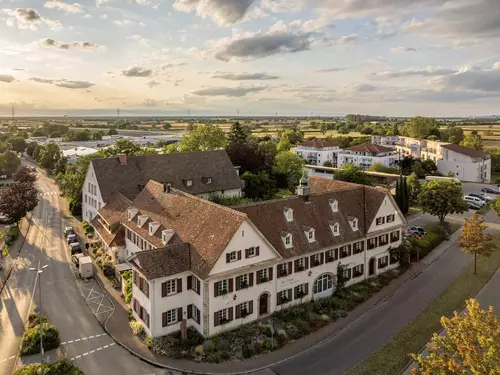
Named Germany’s “First Environmental Hotel” back in the early 1990s, the Alte Post has stayed true to its course ever since. 100% green electricity, its own photovoltaic system, CO₂-neutral cooling, heat recovery for hot water, an EV charging station outside the front door, and eco-friendly materials used in all 51 rooms make this bio-hotel a veritable pioneer of sustainability in the Black Forest.
In addition to its ecological efforts, the hotel also leads by example on the social front: partnerships with workshops for people with disabilities, durable furnishings made from local wood, and a paperless office are all part of daily practices. The goal: to operate fully CO₂-neutral in the coming years – without compromises.
Restaurant Alte Post: Products of the Markgräflerland
Culinary pleasures become even greater when accompanied by the knowledge that each ingredient was cultivated with utmost care and respect for nature. The cuisine at the Alte Post is deeply rooted in the local region. Inside the cozy Hebelstube and out in the garden restaurant, only organic, seasonal, and locally grown products come to the plate, while many of the suppliers are long-standing partners and personal acquaintances – an all-encompassing philosophy you can clearly taste in every bite.


Schloss Lerchenhof: Energy from the Forest, Flavors from the Fields
At the foot of the Nassfeld stands the historic Biedermeier estate of Schloss Lerchenhof – its façade concealing a future-ready concept: electricity from its own hydroelectric plant, warmth from the castle’s private forest, and a heat pump for cooling make the Lerchenhof nearly energy self-sufficient. This holistic approach to sustainability is complemented by strict waste management practices, the elimination of single-use products, rainwater harvesting, water-saving systems, and eco-friendly cleaning agents.
From Field to Plate – The 0-Kilometer Restaurant
As a certified Slow Food Travel Partner, the Lerchenhof not only embraces the principles of “good, clean, and fair,” but also brings these traits to life for its guests: through bread baking, cheese making, visits to the estate’s own curing chamber, or the “Fascination of Bacon” seminar led by the owner of the castle in person. Everything served at the Lerchenhof comes either directly from the estate’s own farm or from other certified Slow Food partners in the region.
Education, Mobility & Awareness
At Lerchenhof, sustainability also means sharing knowledge and fostering awareness. The estate is actively involved in environmental education at schools and kindergartens, encouraging understanding of natural cycles, and inspiring mindful action. This philosophy is clearly tangible to guests as well – through digital guest directories, transparent CO₂ reports, and informational materials that don’t preach, but do invite a closer look. At the same time, the estate sees itself as an active part of the region: supporting traditional craftsmanship, nurturing cultural diversity, and working deliberately to strengthen local structures.

Perhaps sustainability begins right here. In places that give more than they take. That are run with love, preserved with care, and continually reimagined with a view to the future. They invite us to be part of that vision – to travel more mindfully, experience more deeply, and return with a sense of joy.